
During the Hellenistic period the coexistence of native people and Greek populations in the states that were created by the
The most characteristic form of this phenomenon, which is called "religious syncretism", was the iconographic and verbal equation of deities who, in two or more devotional systems, had similar characteristics, bore the same symbols, were worshipped alike or had similar honours and sacrifices attributed to them. A prayer that was addressed to Isis by an Egyptian priest named Isidorus, in the
In certain cases, this equation led to the integration of indigenous and Greek deities and to the creation of others, hybrid ones. Typical examples are the unifications of the Egyptian Thoth or Anubis with the Greek Hermes, from whom Hermes Trismegistus and Hermanubis respectively derived, as well as of the Egyptian Sarapis with Helios, from whom Heliosarapis derived.
| introduction | language | religion | poetry-literature |
| philosophy-sciences | architecture | sculpture | arts |
Note: Click on the small photo to enlarge it.
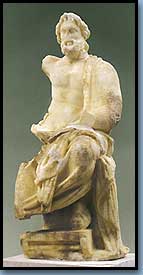
01. Marble statue from Melos, on which Sarapis is most probably represented.

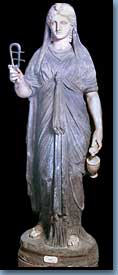
02. Statue of Isis from Naples.
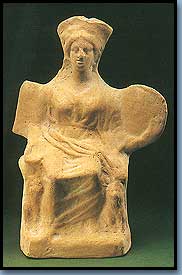
03. Figurine from Amphipolis depicting Cybele. The goddess is seated on a throne with a footstool and is holding a drum. Outdoor sanctuary from the